

Blameless Began as a Learning Tool—Keep Only What Changes the System
The industry shifted away from punitive outage investigations to expose actual system conditions. Operators historically concealed mistakes to protect their employment. Fear drove engineers to hide brittle architecture, undocumented dependencies, and confusing telemetry. Reviews now exist to uncover the environmental factors that set those operators up to fail. A useful postmortem reconstructs why decisions made sense, changes a technical or operational control, and verifies that the change works.
Teams frequently confuse the artifacts of a review with actual learning. A polished document, a calm meeting, and a list of Jira tickets serve merely as outputs. Real learning requires an initial incident drafting window of approximately 48 hours, followed by verifying a changed technical control in staging environments. Memory degrades rapidly after a high-severity event. Capturing the raw data within that initial window prevents the narrative from smoothing over the rough edges of the response. If the Kubernetes cluster behaves exactly the same way next week, the review accomplished nothing. The objective involves altering the environment so the identical failure mode cannot execute twice.
The Incentives That Turn Incident Learning Into Postmortem Theater
Organizations heavily reward rapid document completion. Remediation work must compete directly against roadmap work. This dynamic leaves the cheapest artifact as the most visible sign of compliance. A 14-day SLA for document publication frequently clashes with competing against 6-week product delivery cycles. Engineers quickly learn that shipping the new feature matters more to leadership than fixing the underlying infrastructure fragility. The business demands velocity, pushing reliability work to the margins.
Managerial pressure routinely sanitizes uncertainty from the written account. Disputed decisions, staffing constraints, and known architectural trade-offs vanish from the final draft. Leaders want a clean story to present to stakeholders. This creates postmortem theater where polished certainty erases abandoned hypotheses. The asymmetry between incident work and follow-up work drives this behavior. The outage itself is urgent and fully staffed by senior engineers. Prevention gets handed to a single junior owner after everyone else returns to planned delivery.
The separation of system failure analysis from deliberate misconduct inquiries must remain strict; mixing the two immediately triggers defensive posturing and renders the technical timeline useless. Teams will only share their genuine confusion if they know their employment remains secure.
With a 14-day publication SLA, reliability teams secure the necessary staging environments to test these theories. This dedicated time allows engineers to validate assumptions without impacting production traffic.
Six Tells That Your Blameless Review Is Only Performing Safety
Several clear indicators reveal when a review process exists only to perform safety. Passive language hides the actual decisions made during the firefight. Phrases like "the database was restarted" obscure who took the action and why they believed it would help. Human error appears as the final cause of the outage. Action items consist of generic reminders to update the runbook. Teams generate remediation tickets without any verification step. The same failure modes repeat across multiple quarters. Finally, the documents disappear into a shared drive immediately after publication.
Healthy disagreement differs entirely from blame. A rigorous review examines consequential choices directly. It avoids turning the person who made those choices into the root cause of the event. Suspiciously linear narratives usually emerge after a messy incident. Teams assemble these clean timelines retroactively. Polished certainty erases conflicting signals, abandoned hypotheses, and missing telemetry that defined the actual event.
Historical ticket analysis can expose recurring mitigations across 3 or more separate outages. This repetition proves that the previous reviews failed to change the system. A culture of performative safety generates endless paperwork while leaving the production environment completely exposed to the exact same risks.
Reconstruct Why the Incident Made Sense While It Was Happening
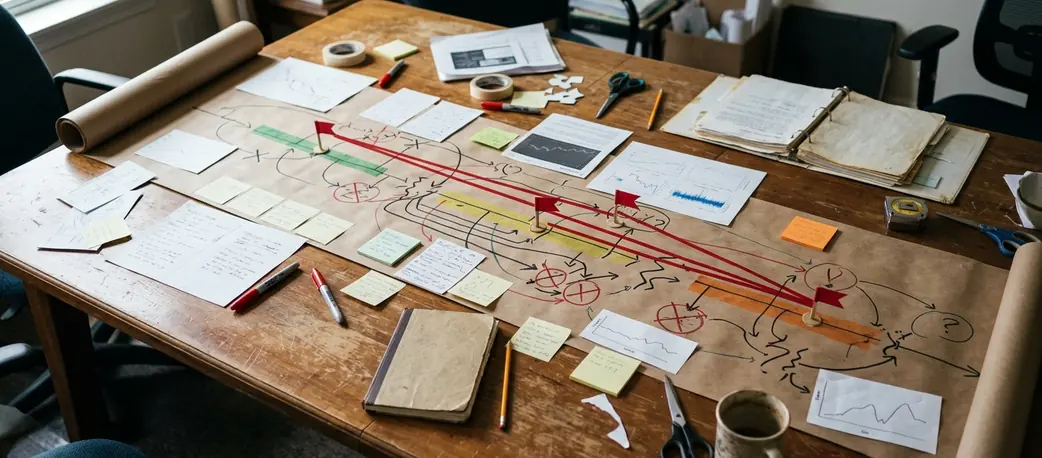
Building an accurate timeline requires raw data before retrospective memory takes over. Investigators must pull alerts, deployment events, logs, chat records, feature-flag changes, and incident commands. Correlating timestamps across Prometheus metrics, chat exports, and deployment logs down to the millisecond provides the foundation. This precise alignment often reveals that operators were acting on delayed or missing telemetry.
At each consequential decision point, the record must show what the operator could observe. It needs to capture what they believed, which constraints applied, and which options appeared available at that exact moment. Hindsight bias makes past events seem predictable. The review must strip away that bias to understand the local rationality of the engineer staring at a broken dashboard.
Initially, facilitation was rotated among the engineers involved in the incident to build empathy. This approach was later dropped because participants naturally glossed over their own unstated assumptions. Moving to an independent facilitator from a neighboring team surfaced the missing context. An outsider asks the basic questions about CI/CD pipeline configurations that insiders skip.
This context replaces the hunt for a single root cause. Teams instead map contributing conditions across detection, containment, mitigation, recovery, ownership, and system design. Failures in complex distributed systems always require multiple contributing factors to align simultaneously.
Write Remediation Work That Alters the Next Failure
A small number of concrete controls provides more value than a massive backlog of technical debt. Effective teams prioritize automated detection, safer deployment defaults, bounded failure domains, tested rollback paths, reduced privilege, or simpler recovery steps. Reducing the deployment batch size from 50 nodes to 5 nodes per canary phase prevents massive outages better than a dozen process documents. Smaller blast radii limit the damage of inevitable configuration mistakes.
Vague actions guarantee future failures. Improving communication, documenting the process, or reminding engineers to double-check accomplish nothing. The review must define the specific behavior, the trigger, and the verification method. If an action item relies on human vigilance, the system remains broken.
Demand Observable Verification. Every accepted item requires an accountable owner, a clear delivery decision, an expected risk reduction, and an observable completion test.
An expiration window of nearly 30 days for unprioritized remediation tickets forces teams to either commit to the work or accept the risk. A closed ticket provides zero proof that the control actually works. The system must demonstrate the new behavior under load.
End the Review Only After the System Moves
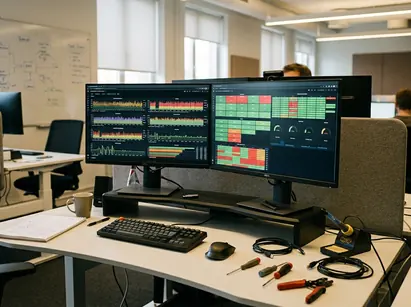
Completion means verified operational change. Publication of the postmortem marks the beginning of the work. A brief follow-up owned by the same engineering organization ensures accountability. This group reviews shipped controls, retests assumptions, and closes rejected work honestly. They feed unresolved risk directly into future infrastructure planning cycles.
A verification sync lasting just about 15 minutes, scheduled in the range of 14 to 21 days post-incident, forces the issue. During this sync, engineers validate the fix by triggering a previously silent failure in a staging environment. The next on-call engineer must inherit a safer default, a faster signal, a smaller blast radius, or a rehearsed recovery path.
At 2:00 AM on a Thursday, the PagerDuty alert fires for a primary database failover. The on-call engineer opens the terminal to find the new automated load-shedding rule already dropping low-priority traffic. The replica promotes itself within forty seconds, the alert resolves automatically, and the engineer closes the laptop to go back to sleep.











Your Thoughts
Share your thoughts.
Join the Discussion